
Many of us have heard about the benefits of meditation, but sometimes find it hard to do. Fewer of us know about the profound benefits of artistic expression. Creating art, however, is another way to access a meditative state of mind and the relaxation it brings. The process of making art overrides the need for verbal communication. Creativity is its own language and enables humans to connect with one another — and themselves — on a non-verbal level.
Especially when practicing the Japanese disciplines Sumi-e ink painting and Haiku poetry I “easily” get rid of the constant chatter in my head,being in the moment,although I find that sometimes a misleading expression.
On Sumi-e black ink painting I wrote something already in this Blog.It is all about trying to capture the essence of nature in a few brush strokes.
Haiku poetry:
This was originally developed by Japanese poets.These are poems that use sensory language to capture a feeling or an image,often inspired by nature.
A Haiku is composed of three word groupings in separate lines.The seventeen total syllables are divided into a five-seven-five syllable count for each corresponding line.Because Japanese words are commonly shorter than that of the English language,it is not uncommon to vary the 17-syllable count.
Matsuo Bashō(1644-1694) was the most famous poet of the Edo period in Japan.
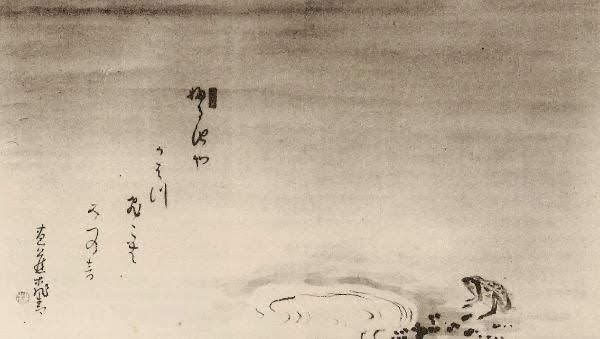
One of his most famous Haikus is about the frog and the old pond.
An old silent pond…
A frog jumps into the pond,
splash! Silence again.
Te next Sumi-e painting tries to capture this Haiku.
Today I tried to create a combination of Sumi-e and Haiku,which,compared to Basho is almost a kind of “profanity”,but anyway.
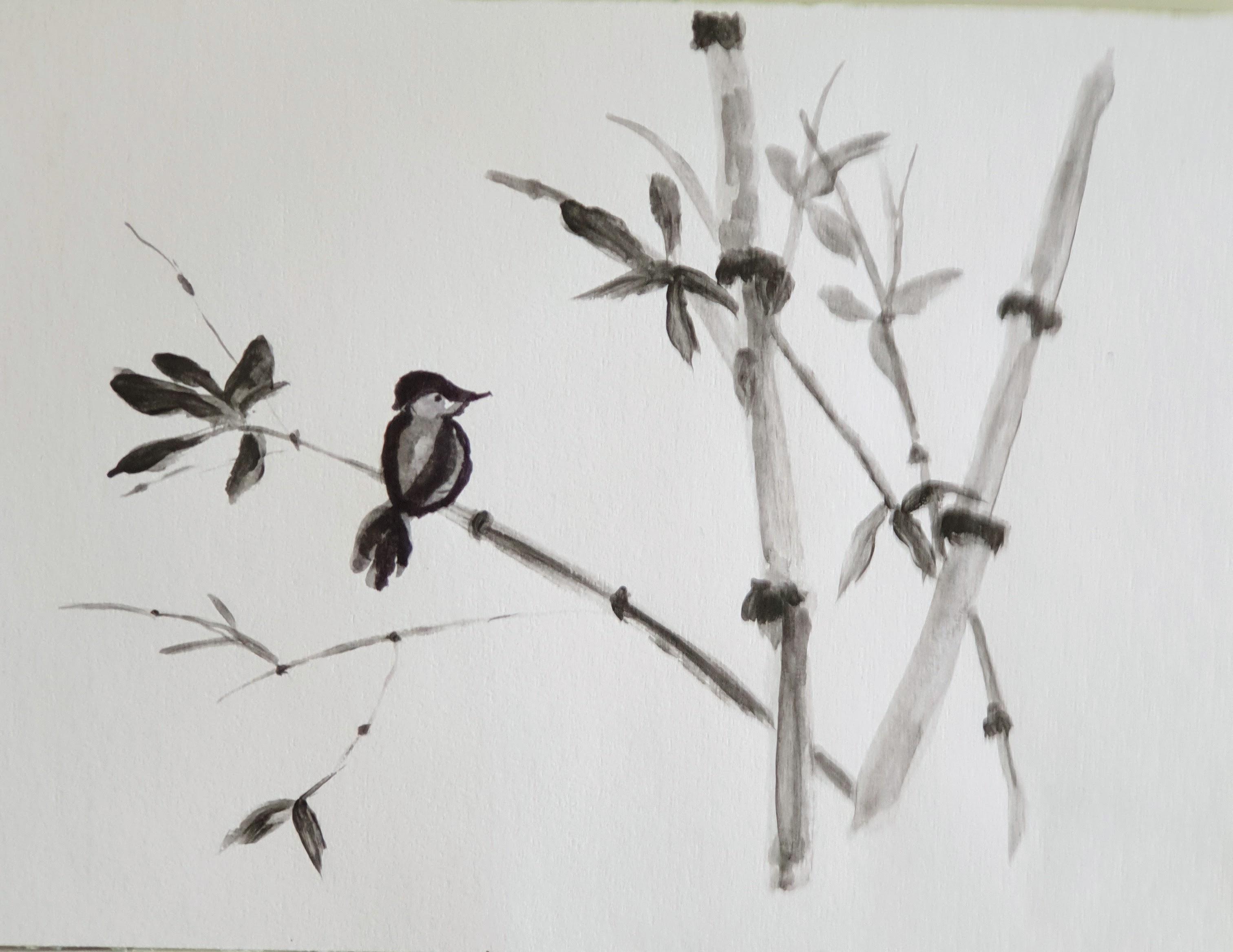
Bamboo standing firm in air
Beautiful moments
 Ruud's Gallery