
De Nederlandse versie van Sumi-e,of Chinees/Japans penseel schilderen is opgenomen in een apart hoofdstuk.
During our winter stay in Spain(2016) I took some lessons in Japanese/Chinese brush painting,or Sumi-e from Jose Sepulcre Diment who is a professor at the University of Alicante.Here you will find a description of the background and essentials of it.
What is Sumi-e
Ink painting originated in China and then was later adapted by the Japanese. The word sumi-e translates from Japanese to mean “ink painting.” Using the same materials today as were used hundreds of years ago, sumi-e artists use contrast and harmony to create paintings that embody the spirit of the natural world. This contemplative art form is based on the idea that less is more. It’s about taking a deep look at an object or scene, and leaving only what is absolutely necessary to invoke the essence of the object. Traditional sumi-e features inspiration from nature; flowers, trees, mountains, and animals are common subjects.
Set up
From the set up of the workstation, to the preparation of ink, to laying down brushstrokes, everything is based on intentioned placement. The workstation is set up to follow a Zen philosophy, to calm the mind and create a clean space for focus and contemplation.
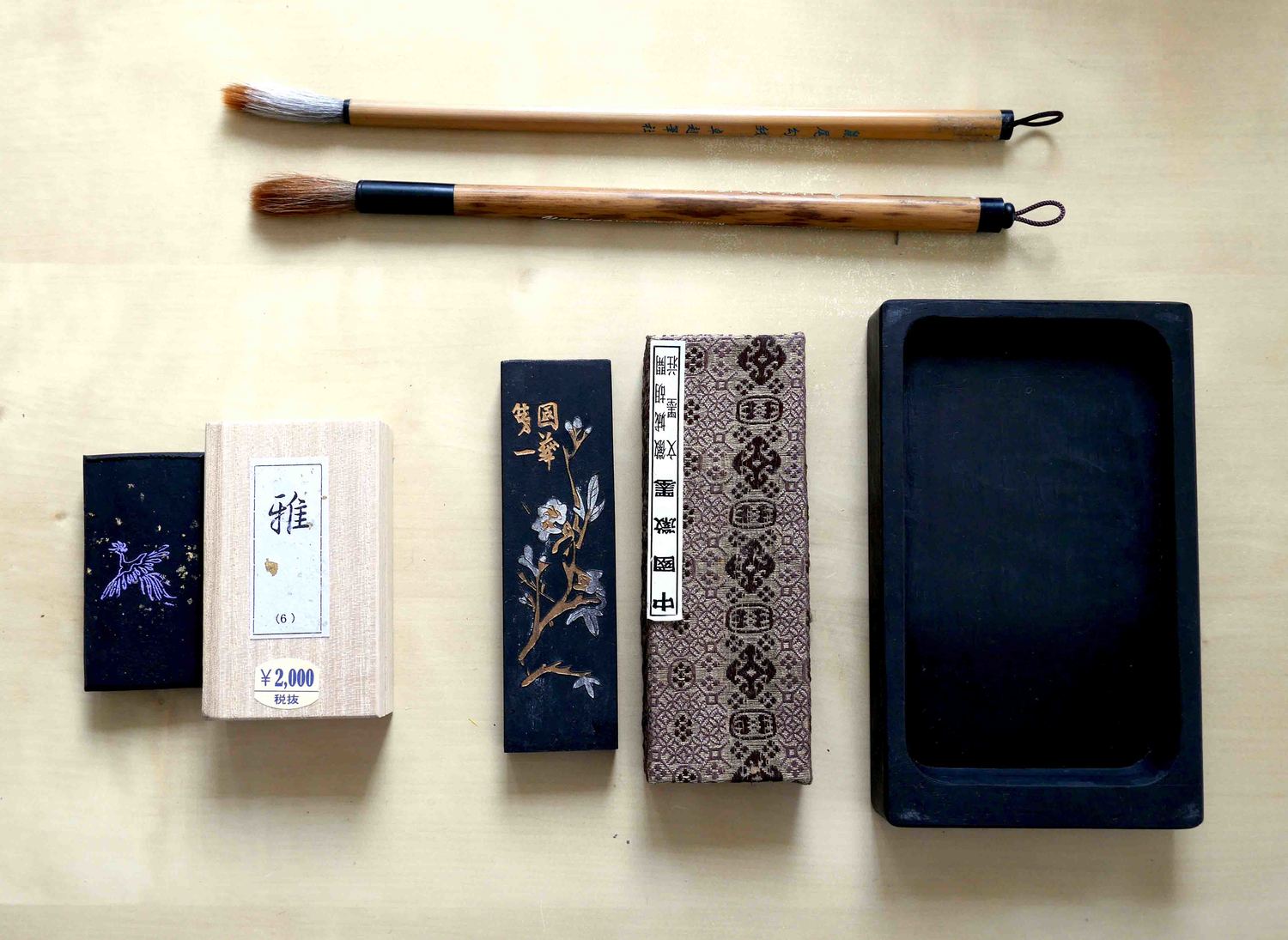
Tools of the trade: beautifully embossed ink sticks, a simple ink stone, and bamboo brushes.
Materials
Sumi-e supplies are fairly basic, requiring only an ink stick, an ink stone, rice paper, and a brush. The ink stick is ground into the ink stone with some water to make a fluid ink; depending on the amount of water used, the pigment will be lighter or darker on the gradient scale. The brush is held perpendicular to the paper, which differs from other forms of painting (and feels a bit strange at first). The amount of water and ink loaded onto the brush will dictate the texture or contrast of the brushstroke. Learning to hold the brush and add the right amount of ink takes practice.
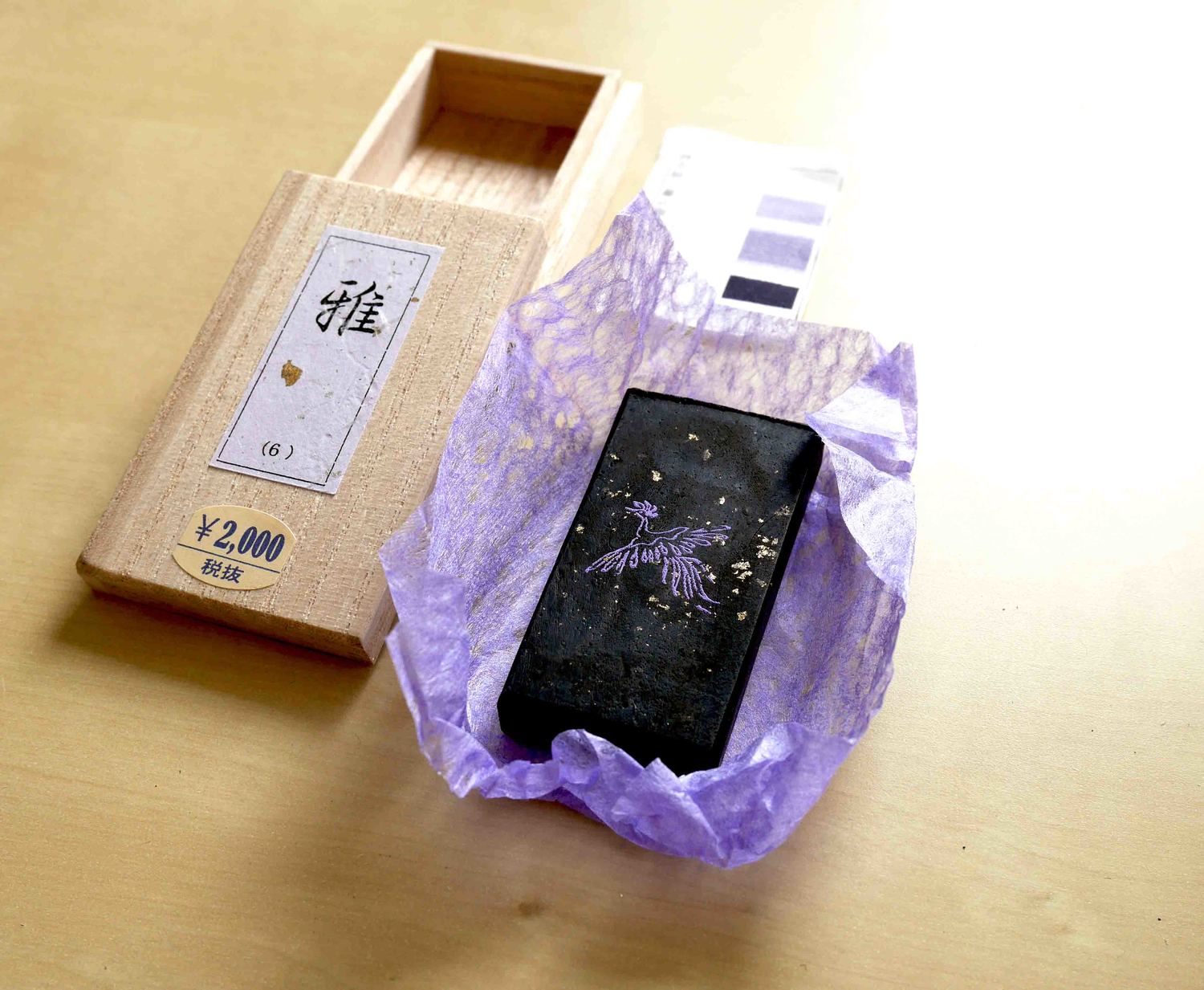
A more rare hue of ink stick (violet), brought back from Japan.
Basics
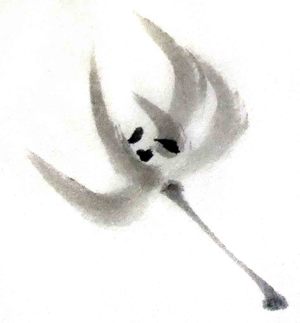
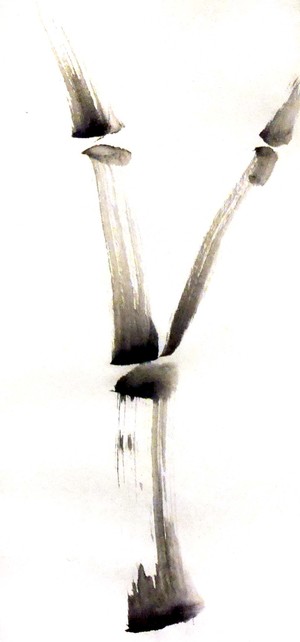
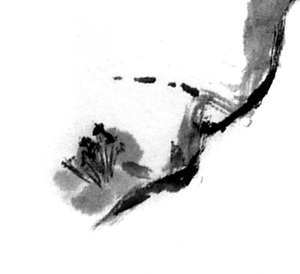
There are 4 main brushstrokes, also know as the Four Gentlemen. From these basic strokes, it is possible to make all of the common subjects found in Japanese brush paintings.
- Orchid
- Bamboo
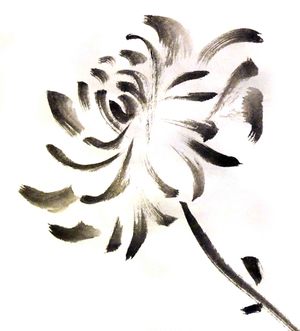
- Chrysanthemum
- Plum blossom
Breathing
With each brush stroke, your whole body (not just the arm or wrist) moves as you breathe out, following the stroke across the paper. For a long smooth stroke, like the ones used for orchids, the breath is long and smooth. For the tiny petals of the chrysanthemum, each petal would be marked by a small escape of breath. Think of it as yoga or tai-chi, but with a brush.
Reflections
Sumi-e painting is more meditative than I expected. The simplicity of working only in greyscale allows you to focus on the brush strokes. Working with watercoIour I found the techniques similar, though more precision was needed. In watercolours, you have the opportunity to move the paint around, add another layer of colour, or even lift off excess paint. In Sumi-e, because the ink is permanent and the paper is so absorbent, you have one chance to get the brush stroke right. Each stroke must be made with intention and thought.
Returning to watercolour painting after this workshop, I’ve found that knowing the Four Gentlemen brush strokes has helped improve my painting techniques. The cross-connections and sharing of skills is where I find so much value in learning and trying new things.
Sumi-e in Summary:
- Less is more.
- Breathe with the brush stroke.
- Learn the basics, then imbue your personal style.
- Detachment is necessary.
- Appreciate the beauty of “mistakes.”
 Ruud's Gallery