
The Machines Enroll in Art Class
During the past 50 years, several artists have written computer programs to generate art—what I call algorithmic art. The process requires the artist to write a detailed computer program with a desired visual outcome in mind.
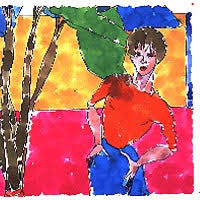
New developments incorporate AI (Artificial Intelligence) and machine learning technologies to allow the computer more autonomy in producing images.
To create AI art, artists write algorithms not to follow a set of rules, but to “learn” the computer a specific aesthetic by analyzing thousands of images. The algorithm then tries to generate new images in adherence to the aesthetics it has learned.With a similar strategy AI proved to be succesful in games like Go or Chess,but also for instance in analyzing X-Rays.
Recently an AI artwork was sold for $432,500 — nearly 45 times its high estimate — as Christie’s became the first auction house to offer a work of art created by an algorithm
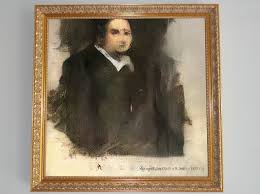
The portrait in its gilt frame depicts a portly gentleman, possibly French and — to judge by his dark frockcoat and plain white collar — a man of the church. The work appears unfinished: the facial features are somewhat indistinct and there are blank areas of canvas. A label on the wall states that the sitter is a man named Edmond Belamy, but the giveaway clue as to the origins of the work is the artist’s signature at the bottom right,an algebraic formula.
This portrait, however, is not the product of a human mind. It was created by an artificial intelligence, an algorithm defined by that algebraic formula.
Maybe this portrait is a bit boring but the developments in AI are going fast and recently at the Basel’s art fair several paintings,made by AICAN (an AI algorithm from Rutgers University) were shown and 75% of the people could not tell the difference between AICAN or a human artist and found the paintings inspiring.
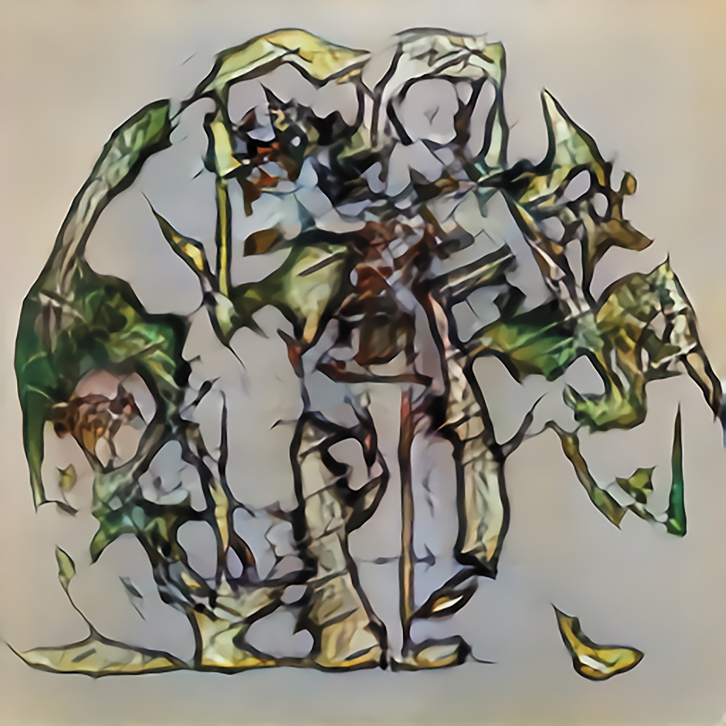
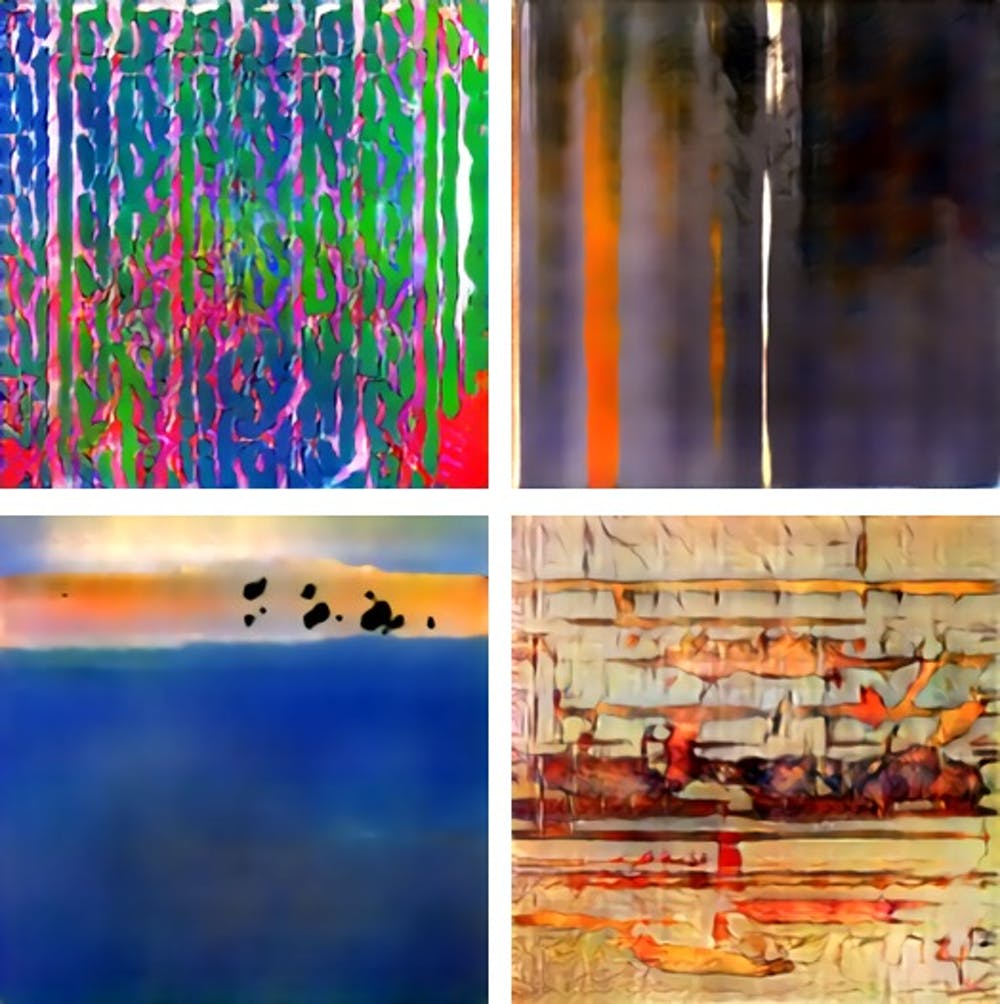
Of course, just because machines can almost autonomously produce art, it doesn’t mean they will replace artists. It simply means that artists will have an additional creative tool at their disposal, one they could even collaborate with.
I often compare AI art to photography. When photography was first invented in the early 19th century, it wasn’t considered art—after all, a machine was doing much of the work. The tastemakers resisted, but eventually relented: A century later, photography became an established fine art genre. Today, photographs are exhibited in museums and auctioned off at astronomical prices.
I have no doubt that art produced by artificial intelligence will go down the same path
Maybe I should study again computer programming,especially AI,but honestly I am glad not having to concentrate again on formulas like

The central part of the algorithm for the generation of the portrait of Edmond de Belamy.
Of course I had to play a little with one of my paintings (Classy lady with hat) and some help of the computer,not really AI ,but applying some filters.
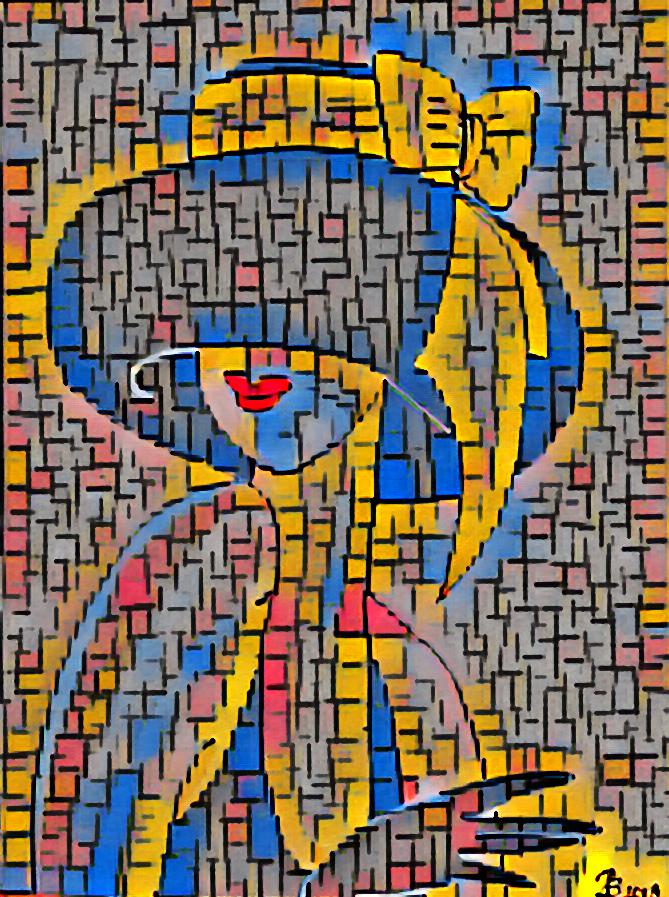
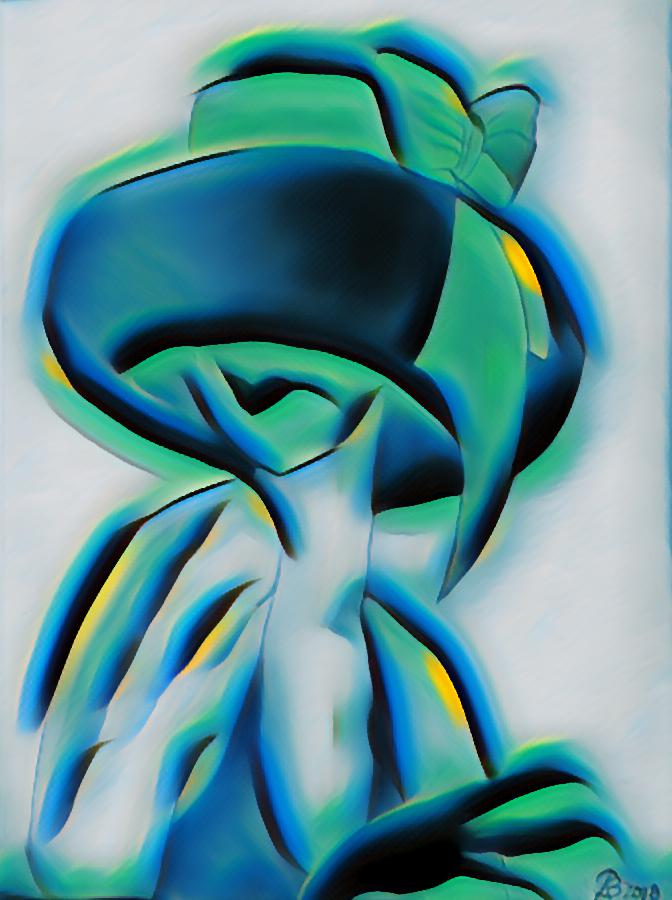
While being pleased with the results,I took this one step further and used this last picture as input for Google’s AI program “Lens” that tries to recognize style and characteristics and search for meaningful associations.Guess what:,it came up with a painting from Corné Akkers (my teacher in portrait drawing),called “the return of Betty Page”.
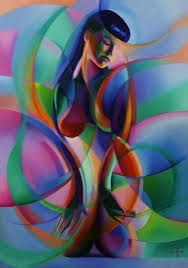
Although it is fun to play around a little,I’d rather spend my time on painting without the help of computers,but just with paint on canvas and a little inspiration.
 Ruud's Gallery